
Grout holds your tile together, and most homeowners never think about it until something goes wrong. In Tucson, where desert dust, hard water, and summer monsoon moisture all work against porous grout, that moment tends to arrive sooner than expected.
If you don’t seal your grout, it keeps absorbing water, oils, dirt, and bacteria. Over time that can lead to stains, odors, mold and mildew, crumbling grout lines, and eventually costly repairs. Professional grout sealing in Tucson adds a protective barrier that helps keep all of that from taking hold.
What Unsealed Grout Absorbs
Standard grout is cement-based and naturally porous, with tiny channels that pull in whatever touches it:
- Water and steam from showers and wet floors
- Oils and spills like cooking grease, coffee, and wine
- Soap residue and mineral deposits from Tucson’s hard water
- Dust and dirt tracked in from outside
- Bacteria and mold spores in damp areas
Once these settle below the surface, mopping and store-bought cleaners usually can’t pull them back out. That’s why grout can look dingy even in homes that are cleaned regularly.
What Happens Over Time
The problems tend to build on one another:
- Stains and discoloration: Pigments bond with the grout itself, so stains reappear even after surface cleaning.
- Odors: Moisture and organic buildup trapped in grout lines can leave a musty smell, especially in bathrooms.
- Mold and mildew: Damp grout gives mold something to grow on. The EPA’s guidance on mold points to controlling moisture as the key to preventing it.
- Crumbling grout: Repeated wetting and drying can weaken grout, leading to cracks and crumbling edges.
- Costly repairs: Once cracks form, water can reach the material beneath the tile, and the problem grows from there.
Sealing helps protect sound grout, but it can’t mend joints that are already damaged. Tucson Tile & Grout focuses on cleaning, sealing, and restoration, so major grout or tile repair is a job for a tile contractor.
Why Tucson Conditions Make It Worse
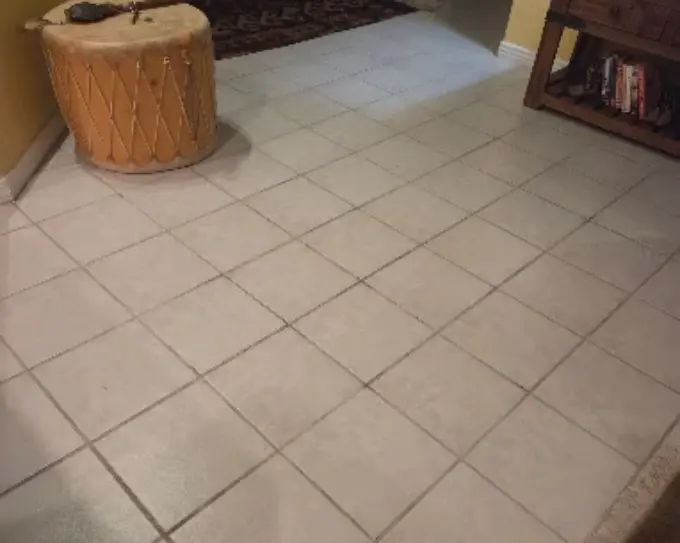
Southern Arizona is hard on grout in a few ways at once. Dust settles into grout lines year-round, hard water leaves mineral buildup, and the summer monsoon brings heavy rain and humidity that can linger indoors.
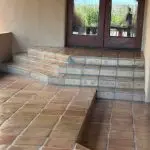
Saltillo tile, a popular choice across Tucson, Marana, and Oro Valley, is especially porous, and its grout shares that vulnerability. Moisture can wick into both tile and grout, and it can lead to efflorescence, the white, chalky residue that makes a warm, rustic floor look dusty. Outdoor patios take the most punishment, with rain and strong sun working on unprotected grout.
Why Fall Is a Good Time to Reseal
With cooler months and the holidays ahead, your floors are about to see more use. More time indoors, more guests, and more spills all land on grout that may have just come through a hard summer.
Sealing in the fall puts protection in place before the busiest stretch of the year, and a professional cleaning beforehand means your tile looks its best when company arrives. Booking ahead also gives you more flexibility before the holiday rush.
When Grout May Not Need Sealing
Not every grout joint needs a sealer. Specialty grouts like epoxy are far less porous and usually don’t need a penetrating sealer. The majority of residential tile, though, uses cement-based grout, and that benefits from sealing.
If your grout has been color sealed, that tinted sealant already provides a protective layer, so you don’t need a separate clear coat on top. Not sure what you have? A professional can usually identify your grout type quickly during an estimate.
Professional Sealing vs. a Quick DIY Pass
The difference comes down to preparation. Sealing over embedded dirt or mildew locks those problems in, which is why a quick DIY pass sometimes leads people to conclude that “sealing doesn’t work.” The sealer worked; the surface just wasn’t ready for it.
A professional grout sealing service in Tucson, like the grout and tile sealing service Tucson Tile & Grout provides, typically includes:
- An evaluation of your tile type, grout condition, and any existing mold or mildew
- Thorough cleaning with professional-grade equipment and surface-appropriate products
- Full drying before any sealer goes on
- Even application with products matched to your tile, including Saltillo, travertine, and other natural stone
How often to seal grout, and how long quality results last, depends on foot traffic, moisture exposure, how well the grout was prepped, and the sealer used. Between visits, a pH-neutral cleaner is gentler on grout than acidic products, and wiping up spills quickly keeps liquids from soaking in. If water no longer beads up on the surface, it may be time to check in with a professional.
Protect Your Grout Before the Holidays
Looking at your own grout and wondering what shape it’s in? Tucson Tile & Grout offers free in-home estimates for grout sealing and tile sealing across Tucson, Marana, Oro Valley, and Catalina Foothills. We’ll evaluate your tile, answer your questions, and recommend what makes sense for your floors. Want to know more about why sealing matters? Read why you should seal your grout and how to do it right, then contact us or call (520) 523-8499 to schedule yours.